
Before Salsa: The Cuban Music Behind the Name
Nengón, kiribá, changüí, son, danzón, songo and timba, and the people who carry their history.
You may have discovered this music through the word salsa. Follow its rhythms, instruments and repertoire back through time, however, and Cuba is central to the story.
Son Cubano, danzón, mambo, cha-cha-chá, guaracha and rumba existed before salsa became an international marketing category. Naming those forms—and the people who developed them—helps us hear the music more clearly. Cuban musicians were composers and innovators, not anonymous sources of a sound that someone else invented. 1, 4
At DC Casineros, this history belongs beside the dance. It explains why we teach Casino and Rueda de Casino by their own names, and why our performances connect Cuban music with the communities and experiences that shaped it.
The cultural roots behind the movement
Our educational presentation on Cuban popular dance begins with a connection: music and movement develop together. To understand Casino, we look at the dances that came before it and at the communities that transformed those dances. 16
European social dances, including contradanza, circulated through Cuba and the wider Caribbean. African people brought musical knowledge and dance practices to Cuba under the violence of the transatlantic slave trade. Their descendants shaped a new cultural life through rhythm, singing, movement and social exchange. Cuban dance grew within that history, rather than simply reproducing dances brought from elsewhere. 1, 16
Eastern Cuban traditions such as nengón, kiribá and changüí also belong in the story of son. Our presentation uses these traditions to help students hear the regional variety within Cuban popular music. They should be understood in their specific cultural settings, rather than treated as interchangeable names for the same rhythm. 16
Before salsa: living musical roots in Guantánamo and Baracoa
The story begins long before salsa became an international label. In eastern Cuba, music and dance have been carried through rural celebrations, families and communities. Nengón, Kiribá and Changüí deserve their own names, their own listening examples and the voices of the people who have sustained them. 17, 19
Guantánamo and the Casa del Changüí. Cuba’s official cultural guide identifies the Casa del Changüí, named for Chito Latamblé, as an institution dedicated to knowledge and promotion of the tradition. A founder’s account of its fourteenth anniversary in 2021 places it in Loma del Chivo and describes its role in community life, learning and preservation. It is a place to seek the music’s history through local knowledge. 17, 18
Research published by scholars from the Universidad de Guantánamo traces Changüí through the rural mountain communities of Yateras and its movement into the city. It describes celebrations and musical gatherings that preceded formally organized professional groups. This history was made collectively; finding a later famous performer does not establish a single inventor of the genre. 19
Dancers belong in that account too. A local remembrance of Evelia “Bella,” a longtime dancer with Changüí Guantánamo, describes the musical gathering held in her honor at the Casa del Changüí in 2015. Her story is one starting point for recognizing the people whose movement helped carry the tradition. 21
Nengón and Kiribá around Baracoa. The official cultural guide identifies El Güirito as a community where these traditions are performed. In a 2013 report, journalist Martha Reyes Noa interviews Teresa Roché Lores, Caridad Toirac Romero and Rafael Cobas Romero. Their accounts connect the musical and dance traditions with family relationships and teaching younger generations. Naming the people lets us move from an abstract musical origin to a history carried by communities. 17, 20
DC Casineros learned with the Nengón and Kiribá community in Baracoa during visits in 2012 and 2014. We remember their generosity and how much they taught our dancers. These encounters connected us with musical history through the people who carried it. 23
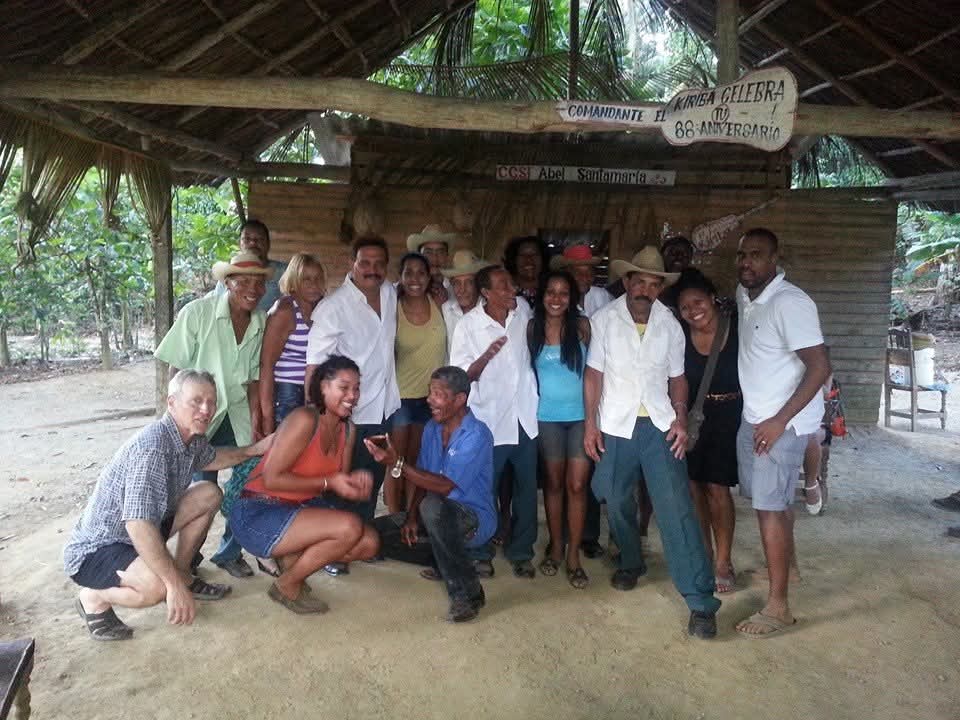
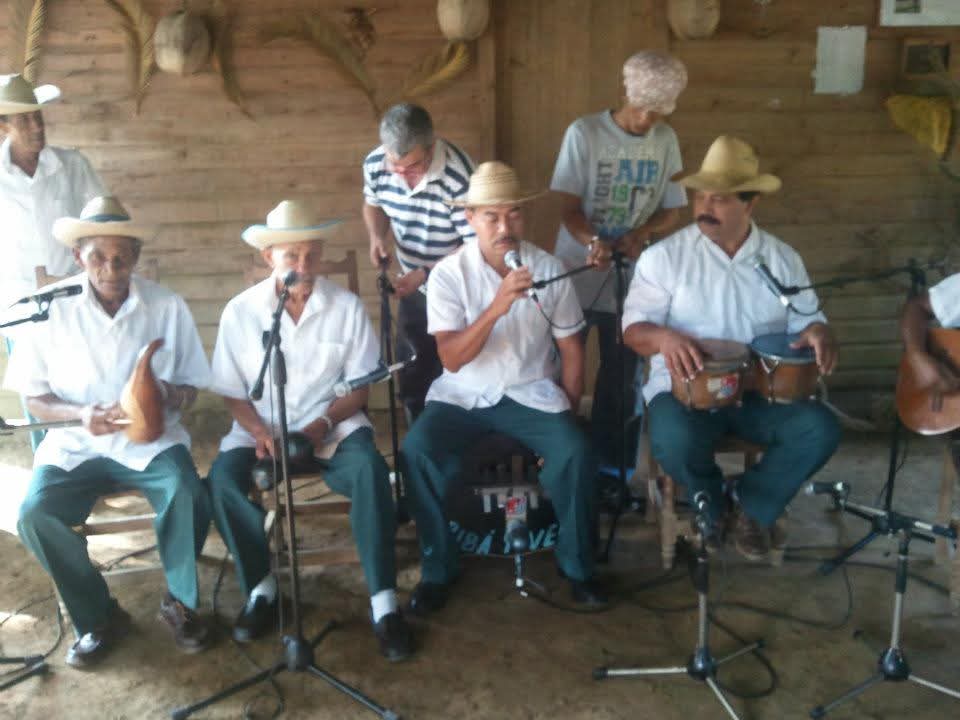
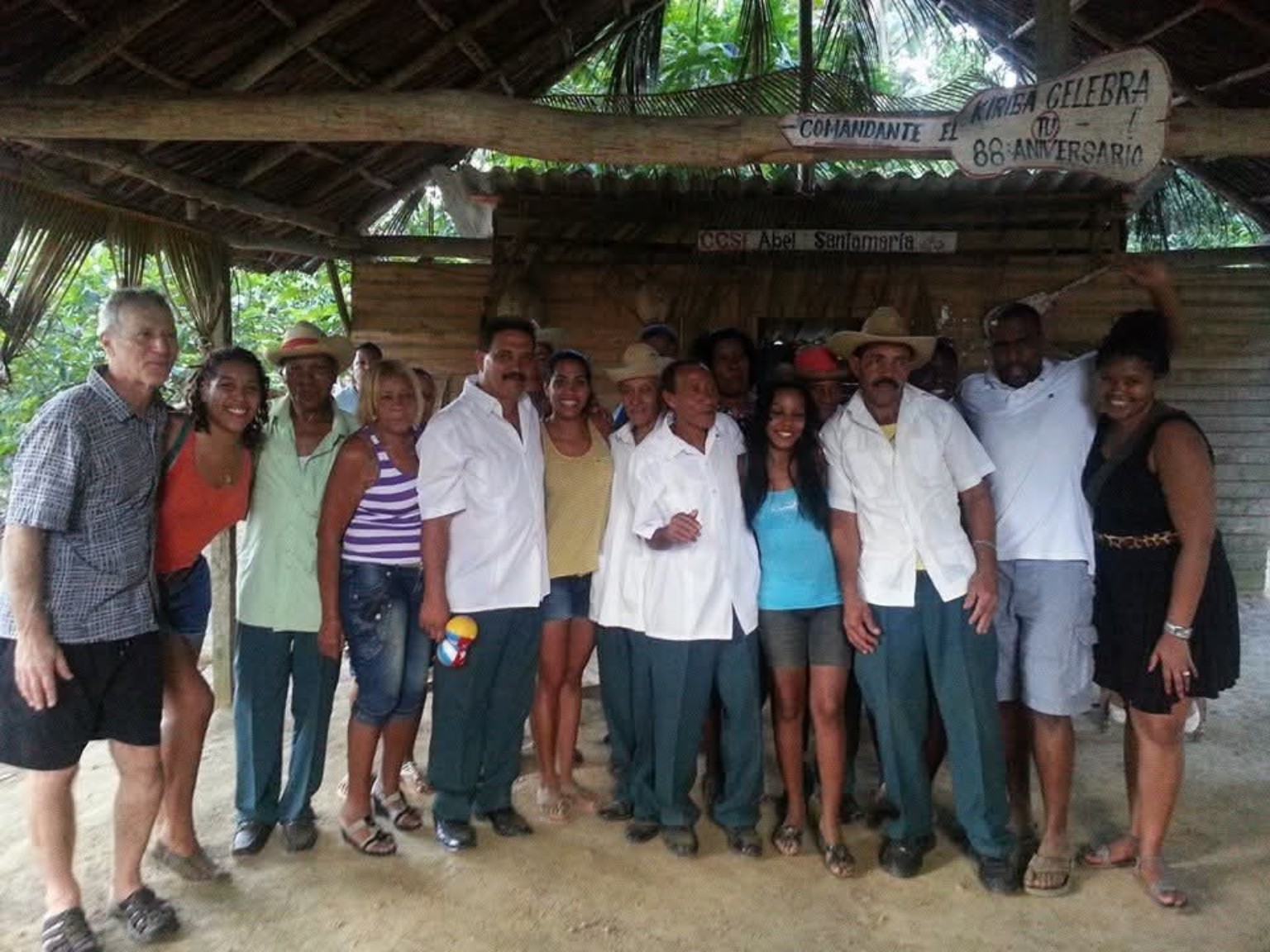
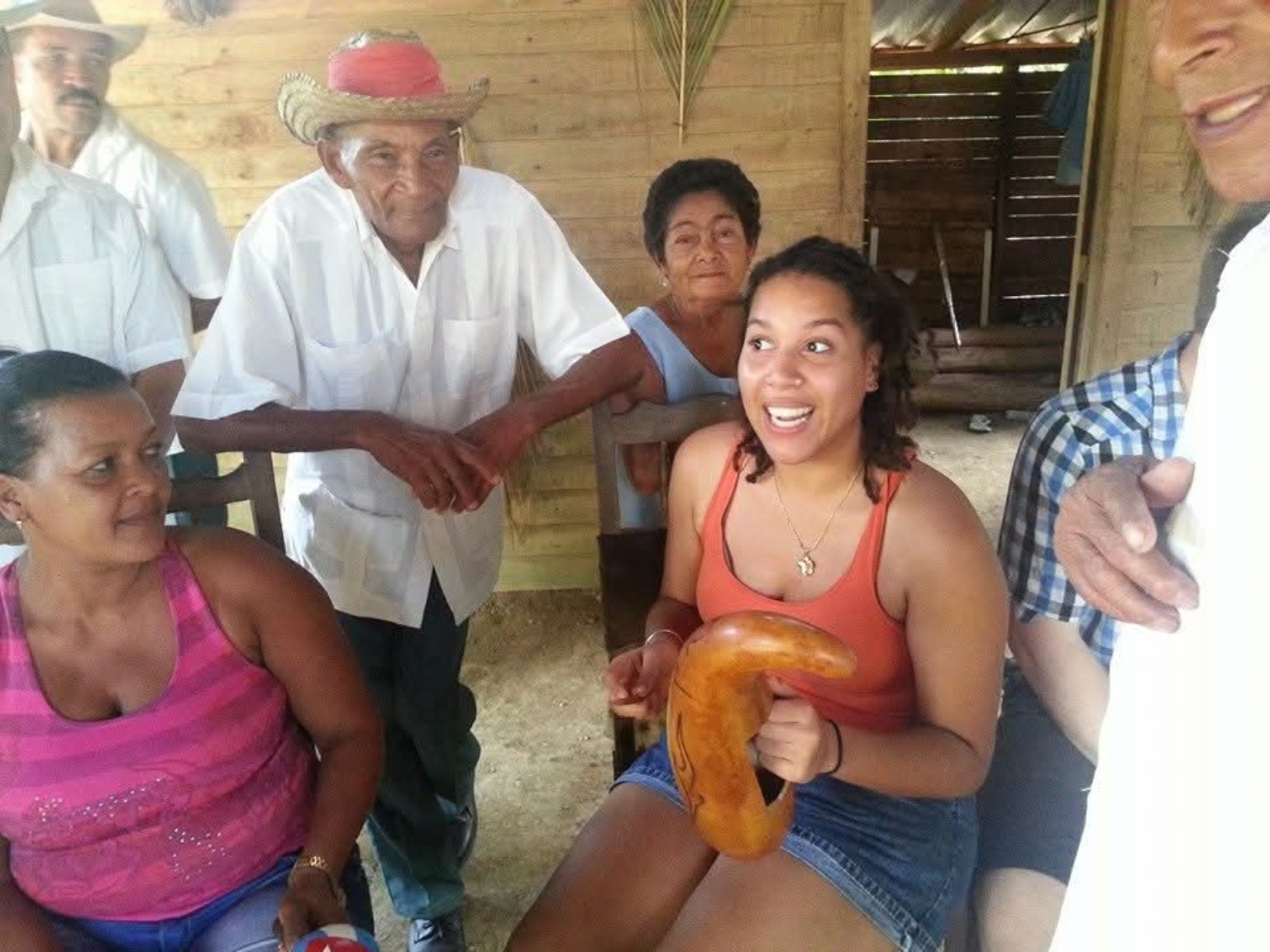
We honor Teresa Roché Lores (1944–2026), identified in Radio Guantánamo’s memorial as director of the Kiribá-Nengón group of Baracoa. Her remembrance belongs beside the history of the community and the traditions it sustained. Read our remembrance of Teresa. Our visit photographs help tell that story from the company’s own experience. 23
For further listening, Changüí: The Sound of Guantánamo, produced by Gianluca Tramontana, documents musicians recorded in the region between 2017 and 2019. The project’s recordings and accompanying essays offer another route into the tradition through identified performers. 22
Changüí in Guantánamo: A Company Memory
Our relationships in Cuba are part of how we learn. Adrian Valdivia recorded this visit to Guantánamo, with Amanda Gill, Paul and other principal DC Casineros dancers present. Adrian remembers the song as an homage to Haiti and its people’s struggle—a reminder that music also carries solidarity and community memory.
Danzón: a national dance with an older history
Cuban popular music has roots older than danzón. European dance traditions were transformed through African and Afro-Cuban musical practices and Caribbean exchange.
Danzón became a defining national dance in the late nineteenth century. Miguel Faílde’s Las alturas de Simpson is associated with 1879. Early ensembles included winds, brass, strings and percussion. The flute-and-string charanga format became important later. As the music changed, dancers adapted their movement and ways of sharing the floor. 1, 16
Danzón belongs to a wider rhythmic history. It did not single-handedly invent clave: African-derived rhythmic organization also developed through other Cuban traditions.
Danzonete, mambo and cha-cha-chá
Cuban musicians kept adapting dance music to dancers’ changing tastes. Aniceto Díaz’s Rompiendo la rutina, associated with danzonete in 1929, brought an expanded sung section into the danzón tradition. That musical family also nourished mambo and cha-cha-chá. Enrique Jorrín’s cha-cha-chá became internationally popular in the 1950s. These developments overlapped; they were not a simple sequence in which each new form replaced the previous one. 1
Son Cubano and Arsenio Rodríguez
Son Cubano: The Genre and Its Dance Traditions
At DC Casineros, we name the music and the dance on their own terms. Son Cubano is a musical genre. In our educational presentation, we trace a dance lineage through rural Son traditions, Son Tradicional, Son Urbano and Casino. These names describe histories and practices that a commercial umbrella label cannot explain.
We teach Casino as a style of Son, not a style of “salsa.” The movement also carries a relationship with earlier Cuban partner dances, including danzón and chachachá. Calling every Cuban rhythm or dance “salsa” hides those distinctions and the people who created them. Changüí, danzón, mambo and other Cuban forms deserve to be named and studied in their own right.
Our lectures connect listening, movement and history so that students can hear the musical differences and understand what they are dancing. 16
Son developed in eastern Cuba and became a major urban dance music as musicians and repertoire circulated to Havana. Its singing, tres and guitar traditions, percussion, bass patterns and alternating lead voice and chorus created a language that listeners still recognize throughout salsa. 4
Arsenio Rodríguez, “El Ciego Maravilloso,” profoundly expanded that language. His conjunto recordings of the 1940s brought piano, tumbadora and multiple trumpets into a powerful ensemble alongside tres, bass, bongó and voices. Interlocking instrumental parts and extended sections for improvisation made his music especially important to later dance-band arrangements. 2
Arsenio did not invent son or every use of a montuno. His particular transformation of son montuno became foundational. Ethnomusicologist David F. García’s research places that achievement at the center of the history of Cuban music and its travels beyond the island. 3
More than one Cuban sound
Cuban dance music developed through connected ensemble traditions: son sextetos and septetos, conjuntos, charangas and larger orchestras. La Sonora Matancera was enormously influential, but it was one part of a much larger musical world.
Beny Moré’s big-band sound and expressive singing, the charanga tradition represented by Orquesta Aragón, and the repertoire of Arsenio Rodríguez and Félix Chappottín show why Cuban music cannot be reduced to one orchestra. Cuban musicians also helped shape the music being made in New York. 6, 7
What happened when the world called it “salsa”?
In New York, particularly during the 1960s and 1970s, salsa became a powerful commercial name and a shared cultural identity. Fania Records, founded in 1964 by Johnny Pacheco and Jerry Masucci, played a major role in its international reach. 5, 8
The central musical debt to Cuba is substantial. Son, son montuno, guaracha, mambo and other Cuban forms supplied much of the repertoire and musical vocabulary. That inheritance should be stated plainly. 4
New York musicians also created new compositions, arrangements, lyrics and approaches to performance. Puerto Rican, Dominican, Cuban, Panamanian and other musicians shaped the scene. Rubén Blades’s El cantante, made famous by Héctor Lavoe, is one example of a new composition within that world. Recognizing those contributions does not relocate the origins of Cuban forms or make their creators disappear. 5, 9
Fania, Johnny Pacheco and the Cuban music behind the catalog
Pacheco’s reliance on Cuban music was concrete: it involved established songs as well as ensemble styles.
Fania’s first release, Cañonazo (1964), drew mainly on popular Cuban repertoire. The title song was written by Evaristo Aparicio and had been popularized by La Sonora Matancera with Celia Cruz. Fanía, by Cuban composer Reinaldo Bolaños, even supplied the label’s name. Those names belong in any account of Fania’s beginnings. 8
For Pacheco’s later El maestro, Fania’s own album notes acknowledge criticism that he copied La Sonora Matancera. They identify reused repertoire, including Francisco Fellove’s Mango mangüé. This is not merely a resemblance inferred by listeners: the label itself describes the Cuban material behind the recording. 6
At DC Casineros, we believe a history that celebrates the global salsa brand while leaving its Cuban composers and musical forms unnamed gives an incomplete account of authorship. Commercial success should not erase the musicians whose work made that success possible.
Recognition, composer credit and payment are related questions, but they require different evidence. A new recording of an existing song is not, by itself, proof of plagiarism. Specific claims that a composition was falsely credited or its author was denied royalties must be tied to the particular song, release and records. The documented reuse of Cuban repertoire already gives us a strong reason to restore its creators to the story.
Songo and Cuban musical identity
Monguito “El Único”: Son has its own name
Ramón Quián, known as Monguito “El Único,” was a Cuban sonero whose career carried Son from Cuba to New York. Fania’s liner notes document his work with Arsenio Rodríguez and Johnny Pacheco, and describe his singing as rooted in Cuban Son Montuno. He should not be confused with percussionist Mongo Santamaría or Santamaría’s son.
The recording below rejects replacing Son’s name with “salsa.” The Díaz-Ayala discography at Florida International University documents the recording on the 1982 LP Monguito (Toboga 613). That is the album date, rather than the date of this YouTube upload.
For DC Casineros, this song is a musical defense of Son’s identity and of recognition for Cuban musicians. Calling the music by its own name makes its Cuban history visible. Our position is clear: we name Son Cubano and Casino as they are. Casino is a style of Son, not a style of salsa. We present Monguito’s recording here because its rejection of the label speaks directly to that commitment.
Juan Formell and Adalberto Álvarez: call the music by its name
Juan Formell also challenged the salsa label. In an archived discussion on the Cuban television program Mi Salsa, he said: “Mi trabajo, el que hago yo, no se llama salsa.” He objected to a commercial name being applied to his work and insisted on identifying it as Cuban music. Read the account of Formell’s television discussion.
Adalberto Álvarez turned accurate naming into a public call to action. A June 22, 2020 report reproduces his appeal to DJs, radio announcers, television presenters and dance teachers: identify Son Montuno, Guaracha, Mambo and Cha-cha-chá by their names. His stated reason was to do justice to the creators of those rhythms and their history. In a November 2020 interview with OnCuba, he also explicitly rejected treating salsa as a genre and emphasized Son’s foundational place in Cuban music.
These objections came from musicians who made and sustained the music. DC Casineros carries that responsibility into teaching: name the music and dances accurately, credit their Cuban creators and keep their history visible.
Cuba kept creating: Los Van Van and songo
Cuban music continued evolving while salsa expanded abroad. Juan Formell founded Los Van Van in 1969, drawing on son and charanga while developing new combinations of electric instruments, percussion and contemporary popular influences.
Formell, César “Pupy” Pedroso, José Luis “Changuito” Quintana and other musicians helped develop songo. The sound responded to dancers and to everyday life in Cuba. Cuban music was continuing to innovate, rather than standing still after the repertoire that became internationally known as salsa. 10
Timba and the Special Period
The experiments of Los Van Van, Irakere and other groups helped prepare the ground for timba. NG La Banda was a key force in its emergence by the late 1980s. Timba then became especially prominent during the economic crisis of the 1990s known as the Special Period. The crisis shaped its social setting; it did not create the music from nothing. 11, 12
Timba brings together son, rumba, jazz, funk, popular song and Afro-Cuban rhythmic traditions through changing bass and piano patterns, forceful percussion and contrasting sections. Its lyrics and performance style often engage with contemporary Cuban life. 11, 12
Cuban music’s exchange with the wider world continued in both directions. Songo, timba and salsa are connected histories, rather than sealed national categories.
Music and life during the Special Period
Bringing that history to the stage
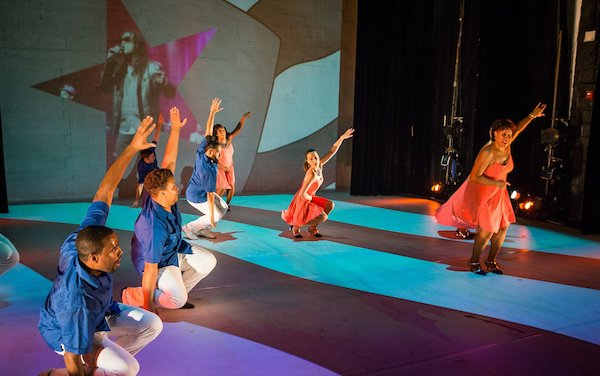
In 2018, DC Casineros presented Bailando con Formell y Los Van Van at Dance Place. The production connected music, choreography, narration and interview material to explore Los Van Van’s place in Cuban life. 13, 14
Our original program and video scripts document the project’s research into changing musical styles, the Special Period and the relationship between musicians and dancers. They also contain interview material concerning the difference between Cuban popular music and its international marketing. The production offers a way to encounter this history through performance as well as reading. 13
Explore the production’s history segments and show footage.
DC Casineros with featured guest Jonathan Burke
Watch the longer show recording: DC Casineros y Los Van Van Cut 1 (1:17:09).
The production archive includes the historical video segments used above. Its playlist also includes a separate Howard Theatre opening performance. The longer recording is labeled “Cut 1”; it should retain that archive label.
The dances that lead us to Casino
Our presentation places danzón, traditional and urban son, and cha-cha-chá beside one another to explore Casino’s movement vocabulary. Partner connection, changes of position, rhythm and ways of traveling across the dance floor give students a way to recognize relationships among the dances. Each also has its own history and character. 16
The presentation follows Casino across generations and regions through historical video examples, including the Rueda de Guanabacoa. It encourages us to learn from dancers and communities, as well as from a list of named figures. 16
Why we say Casino and Rueda de Casino
Casino developed in Cuba through social dancing and the musical traditions around it. Partners share movement, lead and follow, and adapt to the music. In Rueda de Casino, several couples coordinate figures in a circle, creating a collective dance that depends on attention to the whole group. 15, 16
Our educational presentation introduces closed, open and falling positions as a way to understand the dance’s structure. It also explains dancing a tiempo and a contratiempo. These concepts help students recognize how dancers relate to the musical pulse without assuming that every Cuban dancer uses one identical approach. 16
“Salsa” is widely used to market music and dance internationally, but that umbrella term can conceal specific histories. Casino connects naturally with son, songo and timba and can also be danced to much salsa repertoire. Shared musical foundations make those connections possible, while the particular dance and musical form still matter. 15
For us, learning the dance also means listening to the music, naming its creators and understanding the communities that gave it life. Our presentation closes with the idea of Sankofa: learning from the past to understand where we are going. That is the approach we bring to the classroom and the stage. 16
Explore Casino and Rueda de Casino with DC Casineros.
Adapted from DC Casineros’ educational presentation on the history and evolution of Cuban popular dance and music, with supporting musical research and the company’s 2018 Los Van Van theater archive.
Continue the Story
Casino Is Not “Cuban Salsa”: The History of Cuban Social Dance · Cuban dance and music learning guide · Join a class
Sources and Further Reading
- John Santos. The Cuban Danzón: Its Ancestors and Descendents. Smithsonian Folkways, 1982.
- Arsenio Rodríguez entry, Díaz-Ayala Cuban and Latin American Popular Music Collection, Florida International University.
- David F. García. Arsenio Rodríguez and the Transnational Flows of Latin Popular Music. Temple University Press, 2006.
- Morton Marks. East Harlem Music School: Music of the Urban Caribbean. American Folklife Center fieldwork report, 1982.
- Library of Congress. Concerts of the week, October 9, 2020: salsa and Fania.
- John Child. Johnny Pacheco’s El maestro: album notes, Fania Records.
- Homenaje a Beny: album notes, Fania Records.
- Craft Recordings. Johnny Pacheco’s Cañonazo: Fania’s debut album and its Cuban repertoire.
- Library of Congress. Latin Artists on the National Recording Registry.
- Juan Formell: Historia, official artist archive.
- Patrick Froelicher. ¡Somos Cubanos! Timba cubana and the construction of national identity in Cuban popular music. TRANS, 2005.
- P. T. Noble. Study of timba, 2001.
- DC Casineros company history and the original 2018 production program.
- Eve M. Ferguson. DC Casineros’ first full-length Dance Place production. The Washington Informer, November 2018.
- Adrian Valdivia. Casino, commitment and community. Interview, Son y Casino, 2024.
- DC Casineros. Historia y evolución de la danza popular cubana y su música. Company educational presentation.
- Cuba Travel. Cultural spaces in Guantánamo and Baracoa.
- El Changüisero. Fourteenth anniversary of the Casa del Changüí, 2021.
- E. Medina García, E. Divó Maslen and D. Fernández Urgellés. El changüí, origen, características, vigencia y perspectivas. Universidad de Guantánamo, 2011.
- Martha Reyes Noa. Baracoa: Nengón y Kiribá. Community interviews, 2013.
- El Changüisero. Se fue la patrona del changüí. Remembrance of Evelia “Bella,” 2015.
- Changüí: The Sound of Guantánamo. Official recording project, produced by Gianluca Tramontana.
- DC Casineros’ 2012 and 2014 visit archive; Radio Guantánamo/CMKS remembrance of Teresa Roché Lores (1944–2026).